How to Store Important Documents Safely: A Practical Guide to Protecting Your Records
Important documents have a way of accumulating over the years. Tax records, property paperwork, insurance policies, family records, business files, and financial documents can quickly fill filing cabinets, closets, and home offices. While some paperwork can eventually be shredded, other documents need to remain accessible for years. When you no longer have enough room at home or work, storage units in Wilmington, NC can provide additional space for properly packed records and other belongings you need to keep.
However, documents require more preparation than ordinary household items. Paper is vulnerable to moisture, heat, pests, dirt, and careless handling. An organized storage system can help protect important records while making it easier to find what you need later.
Decide Which Documents Are Worth Keeping
Before packing every piece of paperwork you own, spend some time sorting through your files.
Some records need to be retained for legal, financial, tax, property, or personal reasons, while outdated paperwork may no longer serve a purpose. Keeping unnecessary documents makes organization more difficult and increases the amount of storage space you need.
Common documents people may choose to retain include:
- Tax and financial records
- Property documents
- Insurance policies
- Business records
- Employment paperwork
- Warranties
- Medical records
- Family records
- Legal documents
- Important receipts
Retention requirements vary depending on the type of document and your circumstances. When dealing with legal, tax, or financial records, confirm how long they should be retained with the appropriate professional or government agency rather than assuming they can be discarded.
Organize Documents Before Packing Them
A storage unit shouldn't become a place where unorganized paperwork disappears into boxes. Create categories before packing anything. You might separate records into household, property, taxes, insurance, business, medical, and personal files.
Within those categories, organize documents by year or subject. Clearly labeled folders make it much easier to retrieve a specific record without sorting through hundreds of loose pages. Consider creating a simple inventory that lists which records are stored in each box. Keep a digital copy of that inventory somewhere accessible so you can check it before visiting your storage unit.
Use the Right Containers for Document Storage
Ordinary cardboard boxes may work for short-term moving, but documents being stored for longer periods deserve additional consideration.
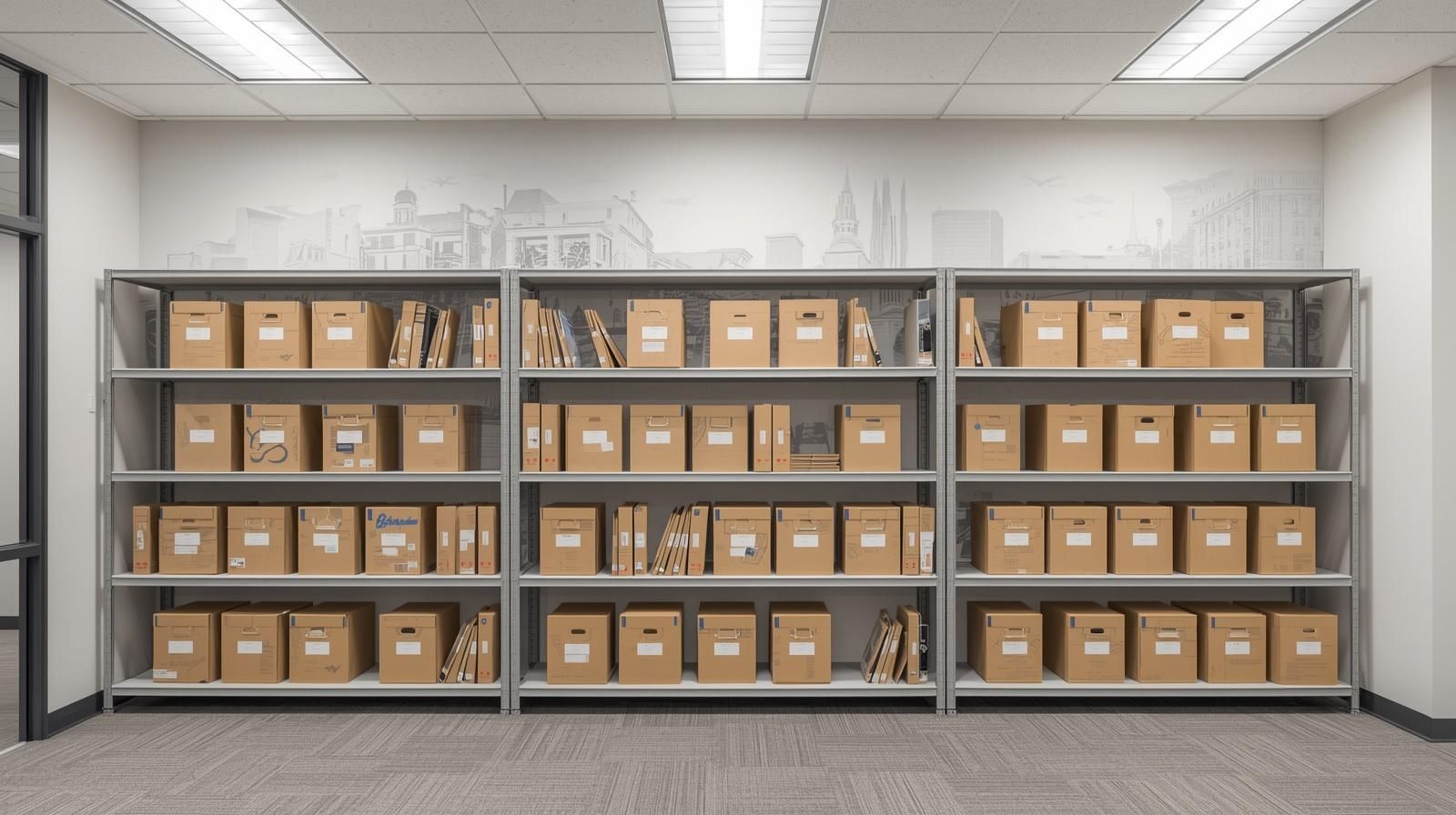
Sturdy file boxes or plastic containers with secure lids can help protect paperwork from dust, dirt, and accidental spills. Whatever container you choose, avoid overpacking it.
Paper becomes surprisingly heavy in large quantities. A box filled with documents can be difficult to lift and may fail if the bottom isn't strong enough. Use smaller containers when necessary so each box remains manageable. Label at least two sides of every container, not just the lid. That way, you can identify the contents even when several boxes are stacked together.
Keep Important Documents Off the Floor
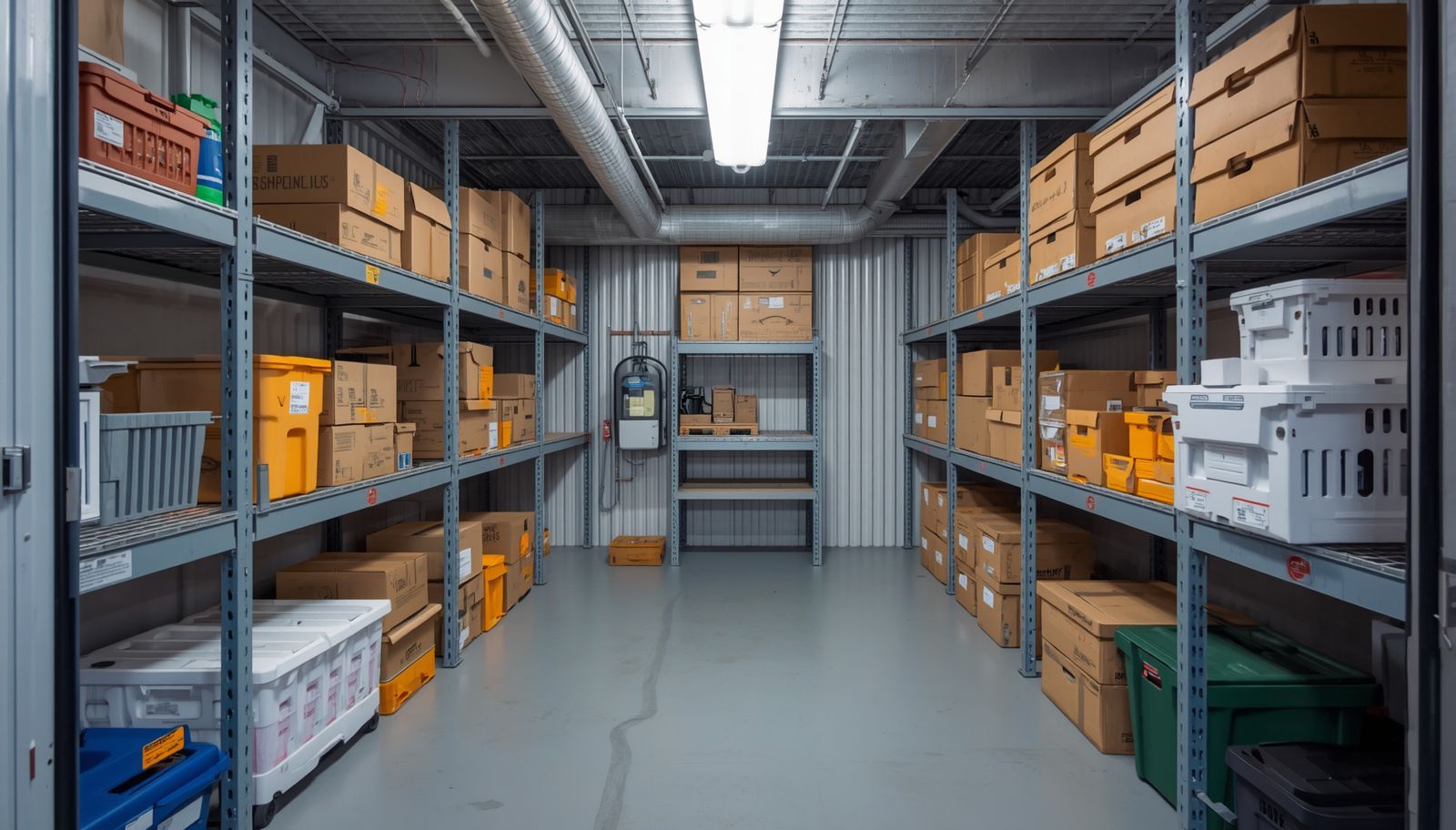
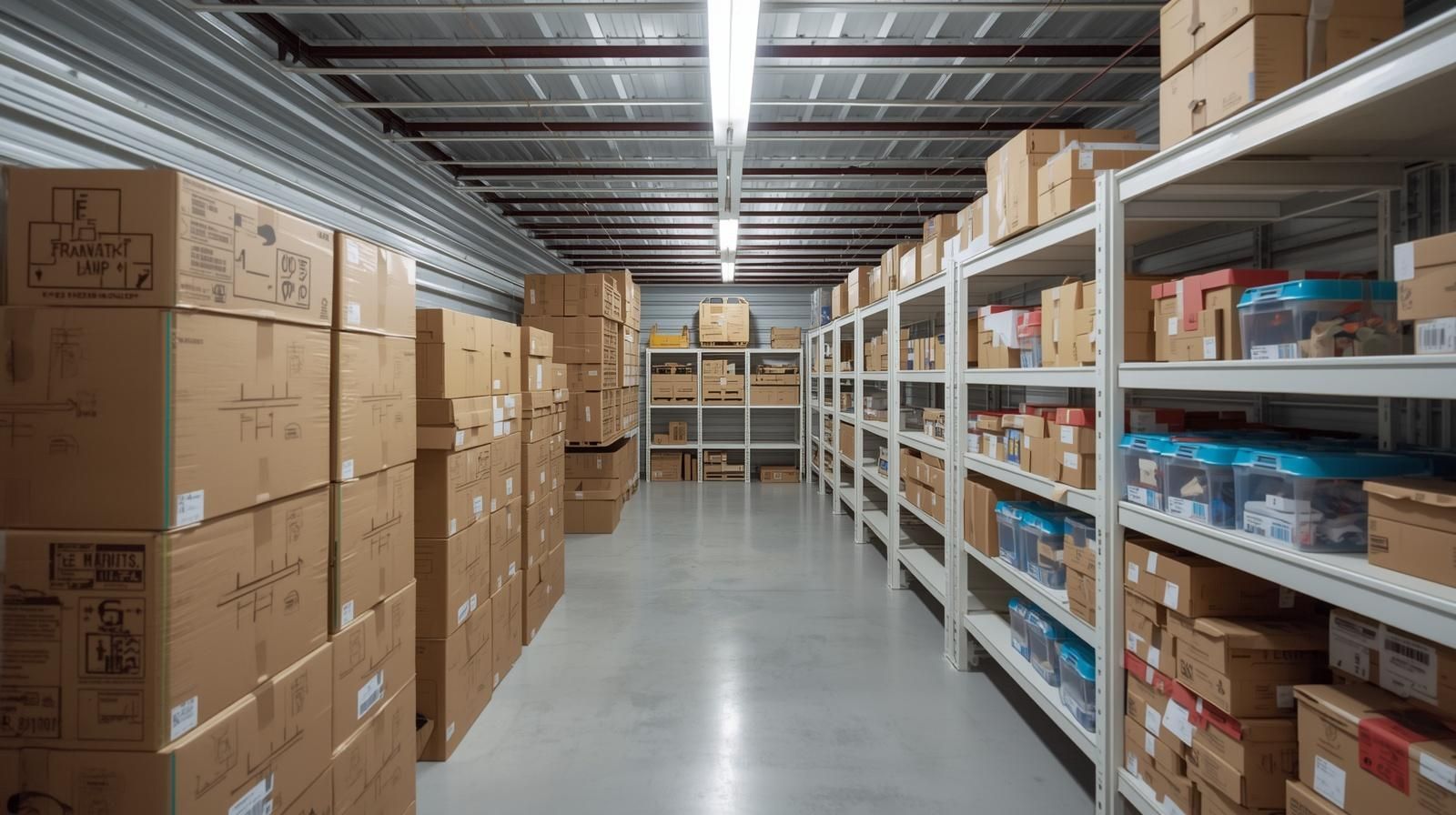
Avoid placing boxes containing valuable records directly on the storage unit floor when practical. Shelving can make document storage considerably easier to manage. It keeps boxes organized, makes labels easier to read, and allows you to retrieve individual containers without moving an entire stack.
If shelving isn't available, consider using a sturdy raised platform or another appropriate barrier beneath your document boxes. You should also avoid placing extremely heavy belongings on top of document containers. Even strong boxes can become crushed over time when they're supporting too much weight.
Protect Documents From Moisture
Moisture is one of the biggest concerns when storing paper. Documents should be completely dry before they're packed. Never place paperwork that has been exposed to water or significant moisture into a sealed container until it has dried properly. Avoid packing documents alongside damp fabrics, recently cleaned furniture, wet outdoor equipment, or anything else that could introduce moisture into the surrounding area.
Sensitive paperwork may also benefit from individual folders, document sleeves, or additional protective containers. The appropriate level of protection depends on the importance of the records and how long you expect to store them.
Consider Climate-Controlled Storage for Sensitive Records
Paper can respond poorly to significant changes in environmental conditions, especially during extended storage.
Climate-controlled storage may be worth considering for valuable documents, photographs, business records, books, and other sensitive paper materials. A more consistent storage environment can provide additional protection when records need to remain stored for months or years.
This consideration applies to other sensitive belongings as well. If you're also storing electronics & tech gear, planning how you'll protect temperature- or moisture-sensitive items before moving them into storage can help preserve their condition.
Always consider what you're storing rather than selecting a unit based solely on size.
Know Where Official Wilmington-Area Records Are Kept
Not every important record necessarily needs to be stored indefinitely in its original form at home. The New Hanover County Register of Deeds provides access to public records and is responsible for records, including real estate documents and other official filings.
The City of Wilmington City Clerk maintains official city files and records of City Council proceedings while also providing residents with a process for requesting public records. Knowing where local government records are maintained can be helpful when organizing important paperwork and determining which documents may be available through official sources if needed.
Knowing where official copies may be available can help you make more informed decisions about organizing personal paperwork. However, don't discard an original legal or financial document simply because you believe another copy can be obtained. Confirm replacement procedures first.
Create Digital Backups of Important Documents
Physical storage shouldn't necessarily be your only form of document protection. For appropriate records, creating digital copies provides another way to preserve information if the original is lost or damaged. Scan documents clearly and organize the files using descriptive names rather than leaving them as generic scan numbers.
A simple folder structure can mirror your physical filing system. For example, you might create separate folders for taxes, property, insurance, business, and personal records. Sensitive digital documents should also be protected appropriately. Use secure storage methods and strong account security rather than keeping important personal information in an unsecured folder.
Remember that some situations still require original or certified physical documents, so a digital scan shouldn't automatically be treated as a replacement for every original.
Keep Frequently Needed Records Accessible
Not every document belongs at the back of your storage unit. If you expect to regularly retrieve tax files, business records, property paperwork, or other documents, keep those containers near the front.
Create an aisle when possible so you can reach document boxes without moving furniture and other heavy belongings. Numbering containers can make this system even more efficient.
For example, your inventory might show that "Box 4" contains 2024 tax documents while "Box 7" contains property records. You can then go directly to the correct container instead of opening multiple boxes.
Separate Documents From Other Specialty Items
If you're storing multiple types of belongings, organize the unit into sections rather than mixing everything together. Documents should have their own designated area away from outdoor equipment, cleaning products, and other items that could spill or introduce dirt and moisture.
The same principle applies to belongings requiring specialized storage considerations. For example, storing wine in a storage unit requires different planning than storing paper records, furniture, or ordinary moving boxes. Grouping similar belongings makes it easier to create appropriate storage conditions while keeping your unit organized.
Avoid Common Document Storage Mistakes
A few simple mistakes can make document storage much more difficult. Avoid tossing loose papers into unlabeled boxes. Even if you think you'll remember what's inside, finding one specific document months later can become frustrating.
Don't overfill containers, store damp paperwork, or place document boxes beneath furniture and other heavy belongings. Another mistake is storing documents you actually need at home. Passports, current identification, frequently used insurance information, and records you may need quickly should generally remain somewhere secure and accessible.
Finally, periodically review what you've stored. Document retention needs change over time, and paperwork that was important several years ago may eventually become eligible for secure disposal.
Final Thoughts on Storing Important Documents
Knowing how to store important documents properly can help protect personal records, business files, financial paperwork, and other information you may need in the future. Start by deciding what to keep, organize records into clearly labeled categories, choose sturdy containers, keep paperwork dry, and create an inventory so important files remain easy to locate.
Whether you're organizing your home office, preparing for a move, or trying to reclaim space from years of accumulated records,
self-storage in Wilmington, NC can provide additional room for properly packed documents and other belongings you aren't ready to discard.